Before the Feed: How Corrections Reached Readers
How corrections reached readers changed with print and digital formats. Learn why notices go unseen and how to check whether an update reached its audience.
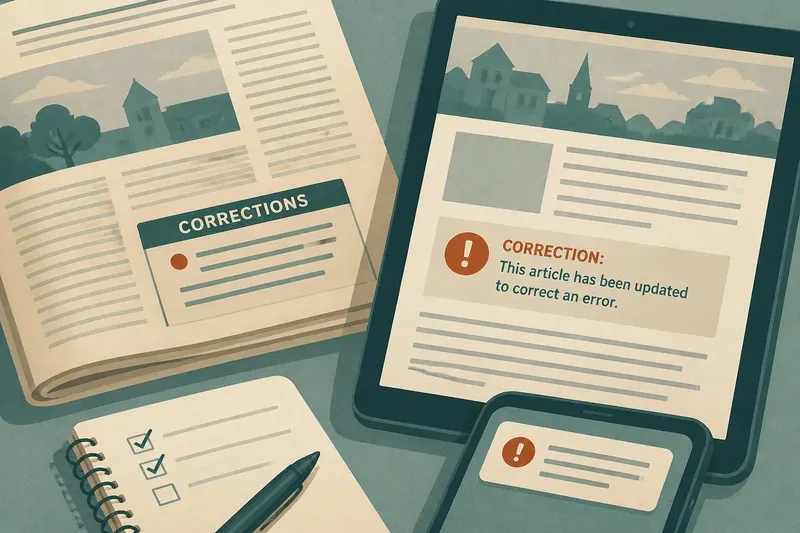
A correction can be accurate and still miss the people who need it. How corrections reached readers depended on where a notice appeared, how clearly it was marked and whether anyone encountering the original claim returned to see the change. The move from printed notices to digital updates altered those conditions, but it did not remove the basic problem: a corrected record and a corrected reader are not the same thing.
Print made the correction visible in a different place
In a printed newspaper, errors could be addressed in a later edition through a correction notice, often in a designated column or alongside an updated account. The correction had a fixed physical setting. Readers who knew to look there could find it; readers who saw only the original article might never encounter it.
That separation was not merely a matter of typography. A printed issue could not be silently altered after it had been distributed. The next edition offered a new opportunity to amend the public record, but it also created a gap between the first report and the correction. People who kept, shared or quoted the earlier issue carried its wording forward.
The location and label mattered. A correction placed where readers expected notices, with enough detail to identify the original item, was easier to connect to the error. A brief note buried in unrelated material could technically set the record straight while remaining hard to find. Print encouraged a visible distinction between the original report and the later account of what was wrong.
Digital updates changed the record but not every reader’s copy
On a news site, an editor may revise an article, add a correction note, update a headline or publish a separate follow-up. These options allow changes to appear without waiting for another print edition. They also create a new uncertainty: which version did a particular reader see?
A reader may have opened the page before the update, read a notification, received a newsletter excerpt or encountered a copied passage elsewhere. Changing the article’s text does not automatically change those earlier encounters. Even when the corrected page is clear, a screenshot or repost may keep the old wording circulating.
This is why the form of a digital correction matters. A clearly labeled note near the relevant passage tells readers what changed. A silent edit may leave the page cleaner, but it gives someone who saw the earlier version no visible signal that the account was amended. The right approach depends on the significance of the error and the publication’s correction policy; readers should be able to tell when a meaningful factual change has been made.
Why do readers miss a correction after an article changes?
Can an updated page reach someone who saw the first version?
Not necessarily. The person may not revisit the page, and a saved copy or shared excerpt may preserve the earlier text. A correction notice on the live page helps readers who return, but it cannot recall every copy already in circulation.
Does a corrected headline update social posts?
Usually, changing a headline on the publication’s site does not rewrite text already copied into a post or message. A platform preview may also retain an older title or image, so readers should compare the circulating wording with the current article and look for an update note.
What does a useful correction notice say?
It identifies the error and states the corrected information in plain language. A vague note such as “this story has been updated” may signal a change without telling readers what was wrong or whether the main claim changed.
When should a correction appear in a separate post?
A separate post can make a substantial correction easier to circulate, especially if the original claim spread widely. It works best when it links back to the earlier report and clearly explains the relationship, rather than leaving readers to infer which account replaces which.
Look for the link between the notice and the original claim
A correction is most useful when it lets readers reconstruct the change. Check whether the notice names the original article, identifies the inaccurate detail and supplies the corrected version. If it only says that wording was revised, the reader may still not know which claim to stop repeating.
Notice placement is part of that link. A note at the top of an article is hard to overlook, but it may not identify the affected sentence. A note at the bottom can sit close to publication details and be missed. A concise notice near the top, paired with enough detail to locate the changed passage, can serve readers who scan as well as those who read closely.
Also distinguish a correction from an update. An update may add new information because circumstances changed or more details became available. A correction addresses something that was wrong. Publications do not always use those labels consistently, so read the explanation rather than treating the label alone as a complete account.
When does a correction travel beyond the article?
A correction placed only on the original page reaches mainly people who return to that page. If the claim was also distributed through a newsletter, push alert or social account, readers may need a correction through those channels as well. The practical question is not whether every channel can be perfectly synchronized; it is whether the correction is visible where the mistaken claim is likely to keep appearing.
Imagine a local news site publishes a report with the wrong street name, then fixes the article and adds a notice near the headline. A reader who saved the page may see the correction on returning, while someone who copied the first version into a neighborhood group may continue sharing the error. A short follow-up in that group, linking to the corrected report and naming the street-name change, gives the correction a route back to people who encountered the original elsewhere.
That example also shows what is not worth the effort: repeatedly refreshing the article in the hope that its correction will somehow reach every person who saw the first version. A better use of attention is to identify the main places where the claim was circulated and check whether the correction appeared there.
Check the correction in a deliberate order
- Find the current article. Use the publication’s own page rather than relying only on a repost or search snippet.
- Look for a correction or update note. Check near the headline, beside the relevant passage and near the end of the article.
- Read what changed. Separate the inaccurate detail from the corrected information; do not assume every update reverses the central claim.
- Compare the circulating version. If a screenshot, alert or social post carries different wording, note whether it predates the correction.
- Check for a follow-up in the same channel. If the original reached you through a newsletter or social account, see whether that channel also acknowledged the change.
- Share the corrected account with context. Link to the current page and briefly say what was corrected, rather than forwarding the old claim without explanation.
This order keeps the task focused. It begins with the publication’s current record, then checks whether the version that reached the reader has been superseded. A reader does not need to resolve every technical detail of a page’s revision history to notice a clear correction; the essential question is whether the changed claim is identified and traceable.
How corrections reached readers still shapes what to trust
The path from print notice to digital update changed the timing, placement and portability of corrections. Print made the correction a later public notice in a new edition. Digital publishing made revision faster and more flexible, while allowing old versions to persist in messages, feeds and saved copies.
When judging a correction, look beyond whether a page now contains the right wording. Ask whether the notice explains the change, whether it points back to the original claim and whether it appeared in the places where that claim circulated. How corrections reached readers remains a useful way to assess the public record: the correction is not complete for a reader until its connection to the error can be seen.